
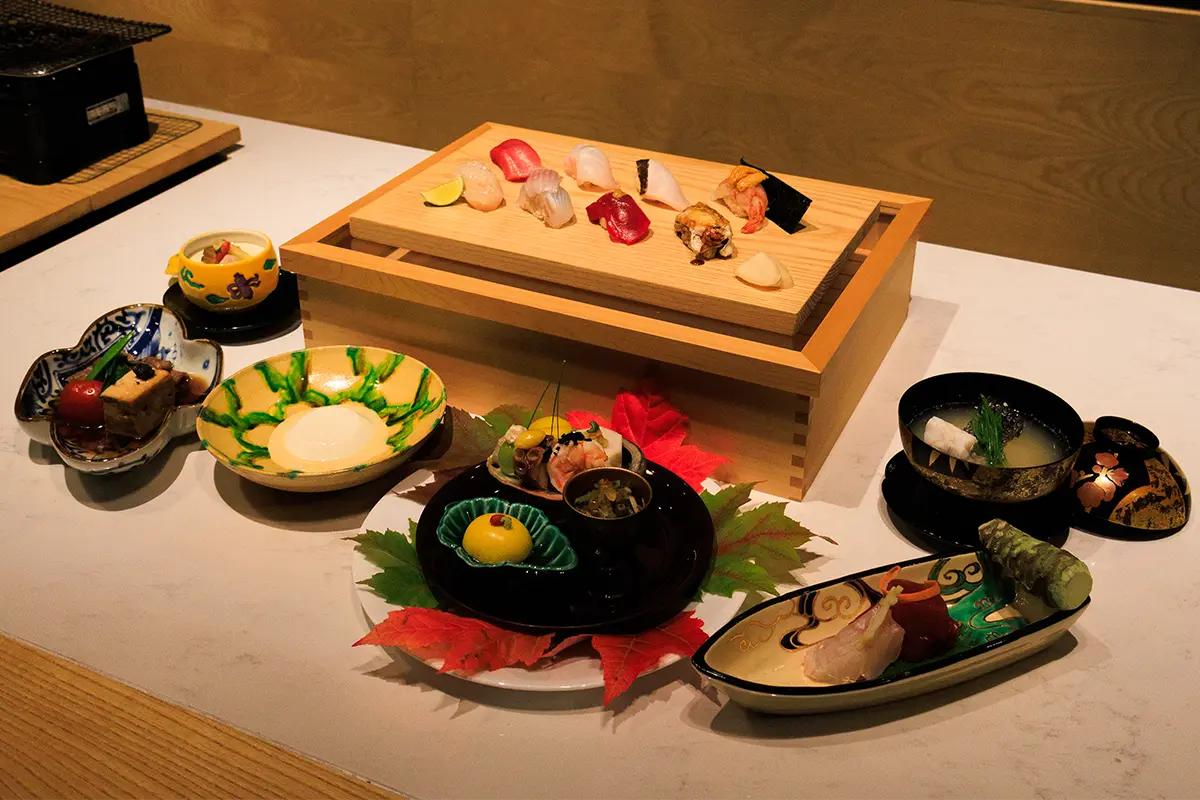
Chef Migaku Inaba, a recipient of Japan’s Minister of Agriculture, Forestry, and Fisheries Award, draws this month’s menu from the season’s own pantry. Kabocha, taro, sweet potato, ginkgo, and matsutake each find a place, and he handles them with characteristic restraint: yuzu-scented miso for the taro, lemon for the sweet potato, grated daikon for the matsutake, and nothing the ingredient does not ask for.
The course opens with eight small dishes on a single plate, then moves through sashimi of bluefin tuna and buri, a fisherman’s miso soup, and a classic chawanmushi. A5 Wagyu sirloin sukiyaki marks the evening’s warmest point before eight pieces of sushi, and a blancmange with crème anglaise brings it to a close. What follows is the October Sushi Kaiseki, course by course.
Zensai – Appetizers
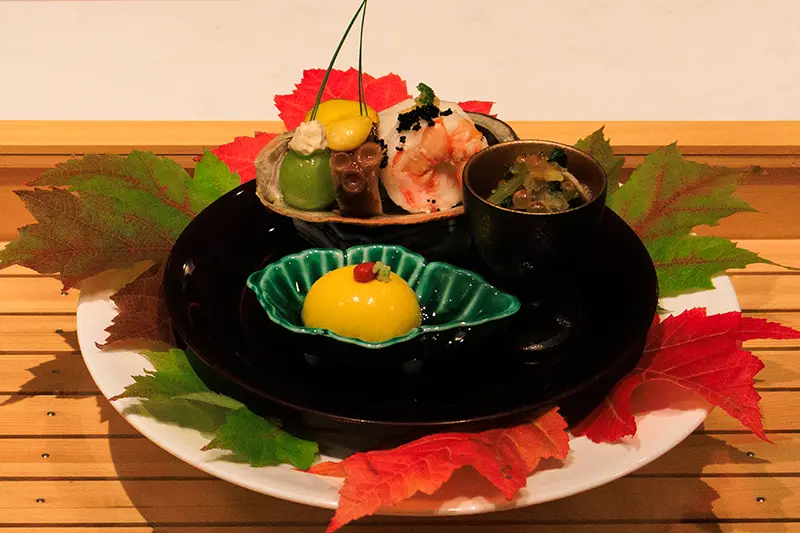
Kabocha Tofu
— A silken, tofu-style preparation of kabocha squash, served with umadashi (a lightly seasoned dashi), goji berry, and a touch of wasabi.
Satoimo with Yuzu Miso
— Taro simmered slowly in dashi until it takes on the broth, served with tama-miso, an egg-yolk miso scented with yuzu.
Maruju Simmered with Lemon
— Maruju is the kaiseki kitchen’s name for satsuma-imo, the sweet potato, after the circle-and-cross crest of the lords of Satsuma. Here it is simmered with lemon to a bright sweetness.
Tōyama Shrimp
— Paired with black tobiko, the tiny, crisp roe of flying fish.
Ginkgo Nuts
— Faintly bittersweet, a fixture of the autumn table in Japan.
Muscat Shira-ae
— Muscat grapes in shira-ae, a smooth dressing of mashed tofu.
Hokkaido Octopus
— Prepared yawaraka-ni, the “soft-simmered” style.
Matsutake Mizore-ae
— Matsutake, button mushroom, and spinach with yuzu-scented ikura (salmon roe), dressed in dashi and grated daikon. Mizore means sleet, which the daikon resembles.
Otsukuri – Sashimi
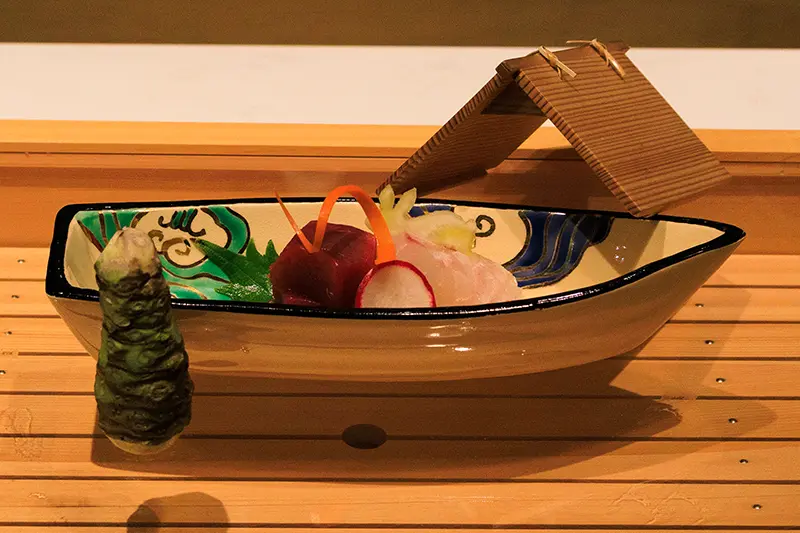
Hon-maguro (Bluefin Tuna)
— Sourced from Japan, its flavor clear and lingering.
Buri (Yellowtail)
— Buri is the name yellowtail earns only at full maturity, when the fish is at its richest.
Wanmono – Soup
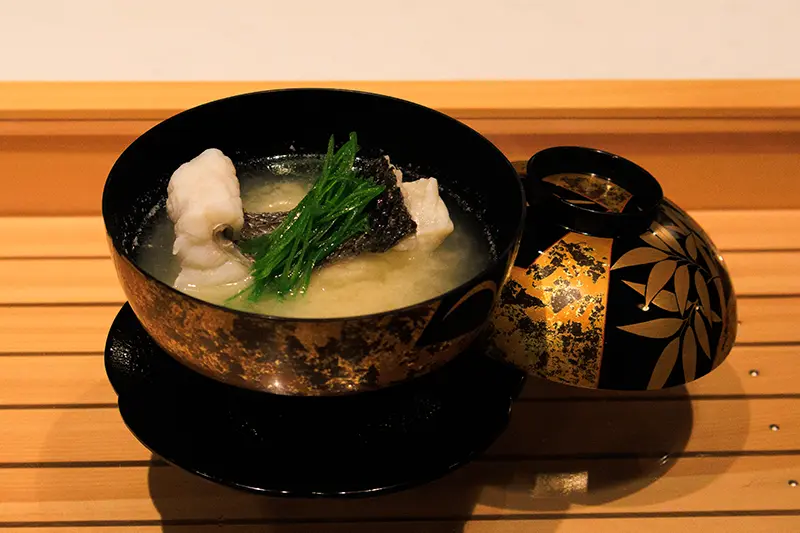
Fisherman’s Miso Soup (Ara-jiru)
The soup this month is the kind Japan’s fishermen make for themselves: ara-jiru, a miso soup built on the heads, collars, and bones left after the day’s fish are filleted. Simmered until they have given everything to the broth, they leave a depth that the miso rounds and settles. The fish changes with the catch, so the bowl varies from one evening to the next.
Chawanmushi – Steamed Egg Custard
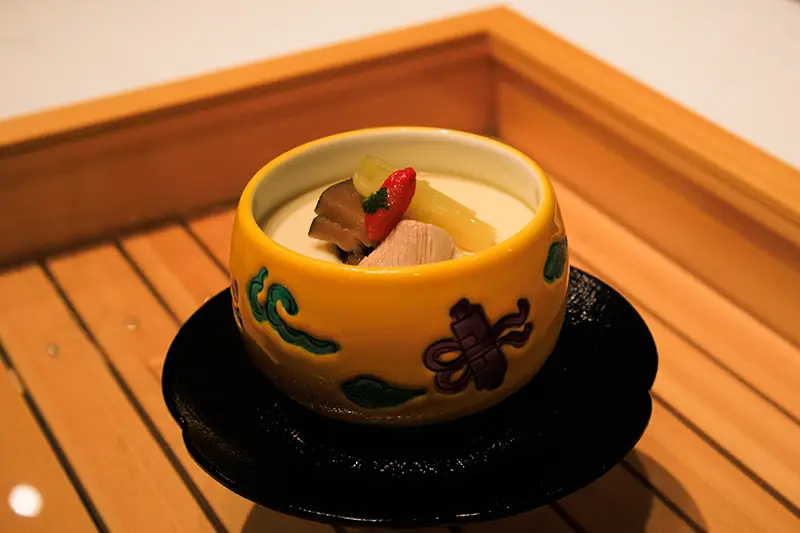
Classic Chawanmushi
Chef Inaba keeps to the classic style here: a savory egg custard, set gently over steam, that holds chicken and shiitake, the mushroom simmered beforehand until it carries the flavor of its broth. Mitsuba, the fragrant Japanese herb, and goji berry finish the cup, with yuzu for its perfume.
Onmono – Warm Dish
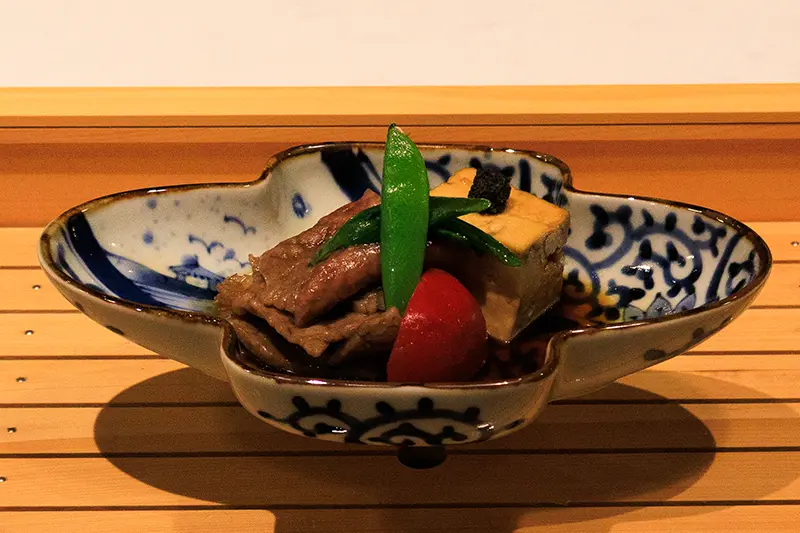
A5 Wagyu Sirloin Sukiyaki
The warm course is sukiyaki, made with sirloin of A5 Wagyu, the highest grade of Japanese beef, marbled so finely that it softens almost as soon as it meets the heat. Tomato joins it, its acidity a bright counterpoint to the sweet-savory sauce, along with tofu, naga negi (the Japanese long onion), and snap peas. Yuzu sansho, a condiment of yuzu and tingling sansho pepper, keeps the richness in check.
Sushi Selection
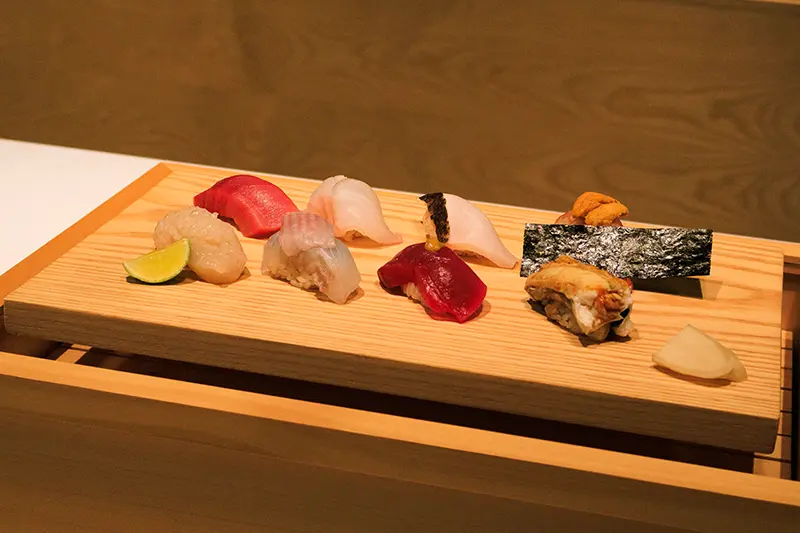
Hon-maguro Toro (Fatty Bluefin Tuna)
— The marbled belly of bluefin, slow to melt.
Hon-maguro Akami (Lean Bluefin Tuna)
— Lean bluefin, with the concentrated savor of the fish itself.
Kue (Longtooth Grouper)
— A prized white fish, firm in texture with a subtle sweetness.
Managatsuo (Silver Pomfret)
— Fine-grained and delicate, long favored in kaiseki cooking.
Matsukawa Karei (Barfin Flounder)
— Counted among the finest of all flounders, with a satisfying bite.
Tsushima Anago (Conger Eel)
— From Tsushima, an island long known for its anago; tender and mild.
Botan Shrimp with Sea Urchin
— Botan shrimp and uni together, two kinds of sweetness in a single piece.
Hokkaido Hotate (Scallop)
— Scallop from Hokkaido, plump and naturally sweet.
The selection shifts with each day’s market. This month it runs from bluefin through three white-fleshed fish and Tsushima anago before closing on shrimp, sea urchin, and scallop.
Dessert
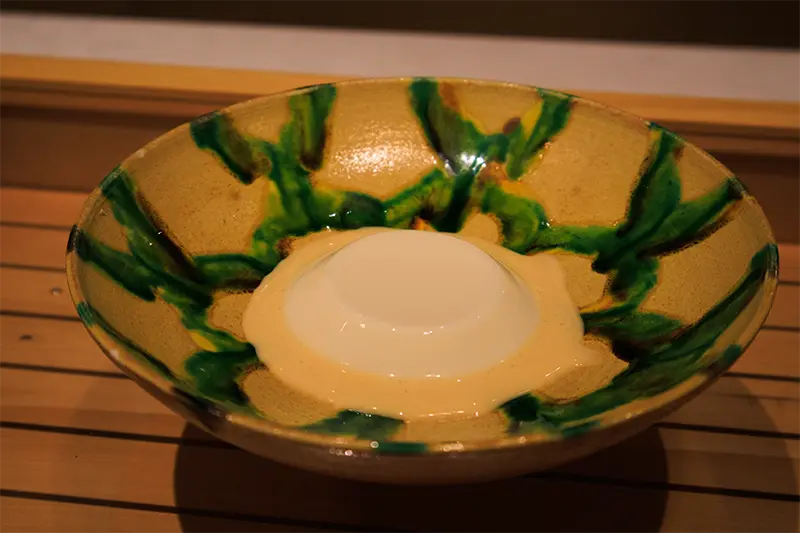
Blancmange with Crème Anglaise
— A softly set milk pudding, pale and cool, served with crème anglaise, a pouring custard.
Reserve Your Table at Migaku Seattle
Migaku’s October Sushi Kaiseki Course is served for a limited season at the counter in Seattle, with two seatings each evening, at 5:00 and 7:30. Seating is intimate and each course is prepared to order, so the experience rewards an unhurried evening.
Reservations are available exclusively through OpenTable. For the most intimate expression of Chef Inaba’s cooking, the Chef’s Choice Kaiseki seats just six guests at the sushi counter each evening at 7:30 pm, by prepaid reservation. However you choose to join us, we look forward to welcoming you to Migaku this October.