
Chef Migaku Inaba, a recipient of Japan’s Minister of Agriculture, Forestry, and Fisheries Award, builds this month’s opening course from the classical repertoire of the kaiseki kitchen. Several of its techniques carry their history in their names: yuan-yaki, after a tea master of the Edo period; Oranda-ni, after the Dutch traders of Nagasaki; kinuta-maki, after a mallet once used to soften cloth. The season supplies the rest: roe-bearing ayu, sweet chestnut, lotus root, and a turnip cut to bloom like a chrysanthemum.
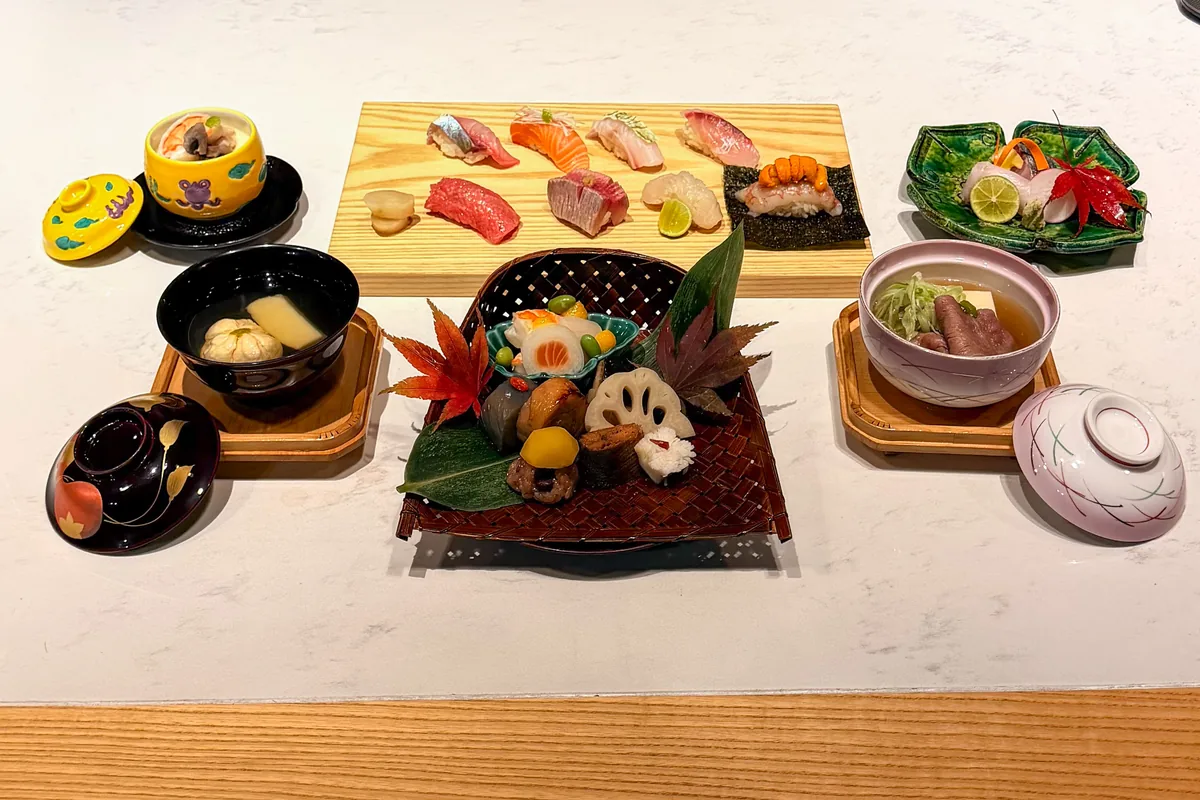
The course opens with eight small appetizers, then moves through sashimi of bluefin toro, kuchibi-dai, and shima-aji, a clear soup with a shrimp dumpling, and a classic chawanmushi. Eight pieces of sushi follow. The last savory course is also the warmest, A5 Wagyu shabu-shabu in dashi, and a chocolate marquise with strawberry brings the evening to a close. What follows is the November Sushi Kaiseki, course by course.
Zensai – Appetizers
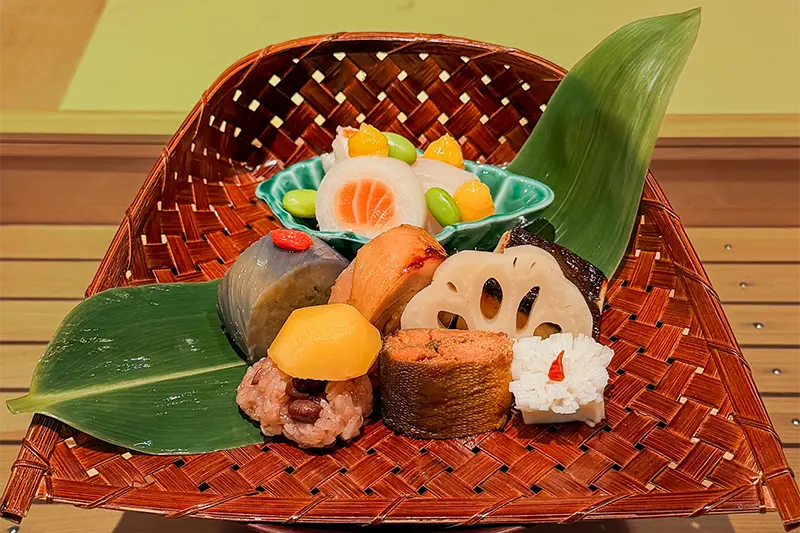
Salmon Kinuta-maki and Shrimp
— Kinuta-maki is a roll bound in a paper-thin sheet of vegetable, most often daikon, and named for the kinuta, a wooden mallet once used to soften cloth, whose shape it recalls. The shrimp beside it is cooked just long enough to bring out its color.
Scallop with Kimizu
— Scallop and aomi, the cook’s term for a touch of green, dressed with kimizu, a golden sauce of egg yolk and vinegar thickened over gentle heat.
Eggplant Oranda-ni
— Eggplant fried, then simmered until it drinks in the broth. Oranda means Holland: in the Edo period the name marked cooking in the Western manner, which reached Japan through the Dutch trading post at Nagasaki.
Chicken Yuan-yaki
— Chicken steeped in soy sauce, sake, and mirin scented with yuzu, then grilled. The method is credited to Kitamura Yuan, a tea master and epicure of the Edo period.
Black Cod Saikyo-yaki
— Black cod marinated in Saikyo miso, the pale, sweet miso of Kyoto, and grilled until the surface caramelizes. Many diners know the preparation as miso black cod.
Lotus Root
— Hasu, in season from late autumn and valued for its clean crunch. In Japan, the openings that run through it stand for a clear view of what lies ahead.
Komochi Ayu Kanro-ni
— Ayu, or sweetfish, a river fish that carries roe in autumn (komochi means “with roe”), simmered slowly in sweetened soy sauce until the whole fish turns tender. Kanro means “sweet dew.”
Sekihan with Sweet Chestnut and Kikka-kabu
— Sekihan is glutinous rice steamed with red beans, the dish Japan serves at celebrations. It comes with a sweet chestnut and kikka-kabu, the chrysanthemum turnip.
Otsukuri – Sashimi
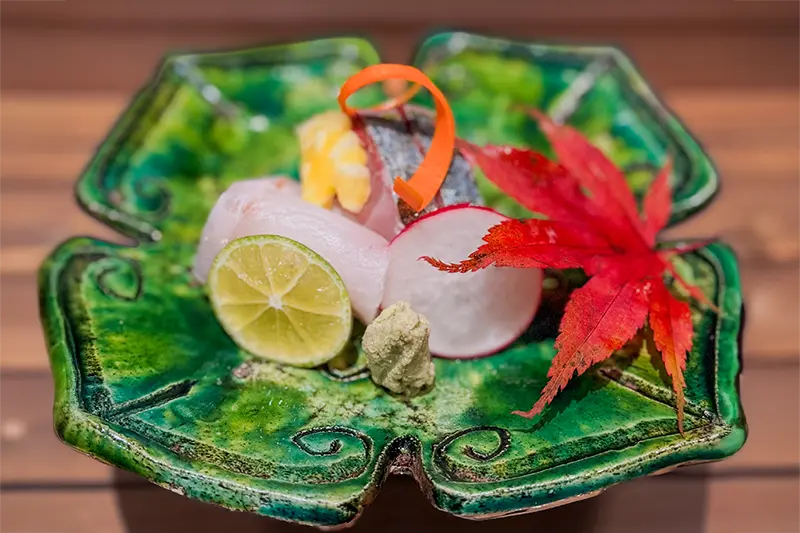
Hon-maguro Toro Sashimi
— The fatty belly of bluefin tuna, richly marbled and soft on the tongue.
Kuchibi-dai Sashimi
— Emperor bream, a firm white-fleshed fish with a clean sweetness. Its Japanese name refers to the vivid red inside the fish’s mouth.
Shima-aji Sashimi
— Striped jack, widely regarded as the finest of the jack family: firm, with a quiet richness.
Wanmono – Clear Soup
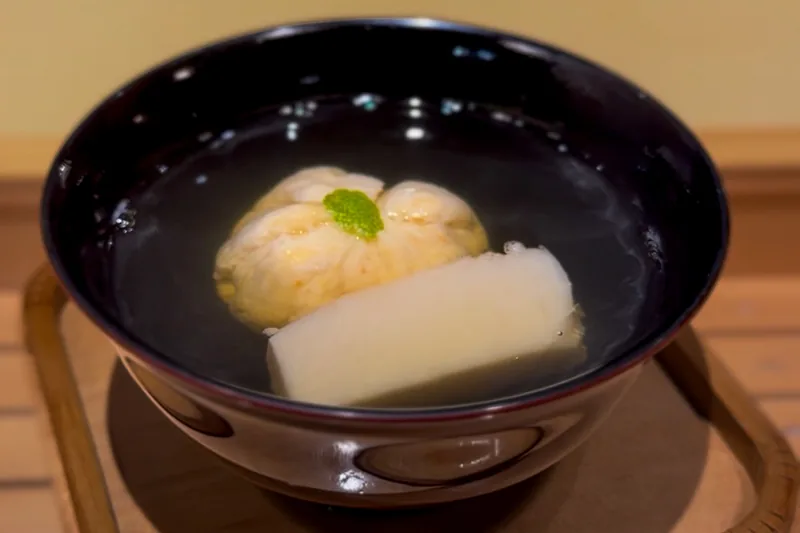
Ebi Shinjo in Ichiban Dashi
The soup this month is a clear one, and the broth is the point. Ichiban dashi, the “first stock,” is drawn briefly from kombu and katsuobushi (dried bonito) and prized as the most delicate stock in the Japanese kitchen. In it rests ebi shinjo, a soft dumpling of ground shrimp, with satoimo, the small taro of the Japanese autumn.
Chawanmushi – Steamed Egg Custard
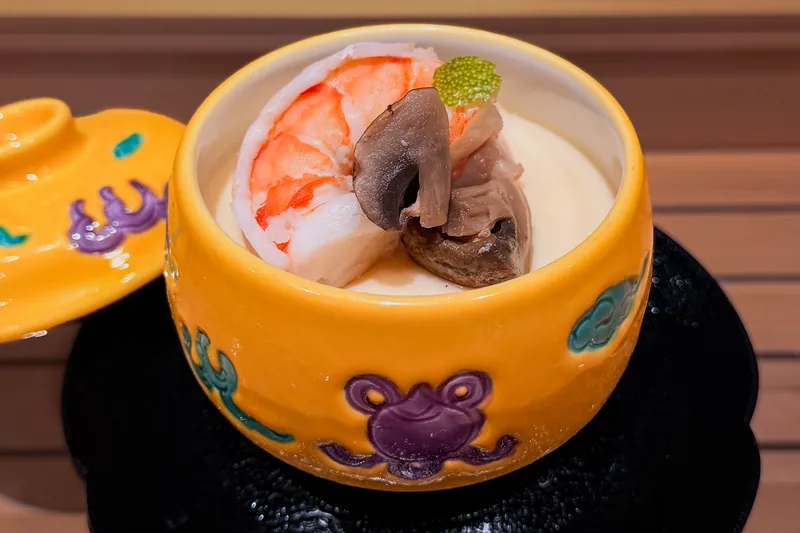
Classic Chawanmushi
The chawanmushi is the classic one: a savory egg custard set gently over steam until it barely holds its shape. Shrimp, mushrooms, and chicken are set within it, and yuzu lends its fragrance at the finish.
Sushi Selection
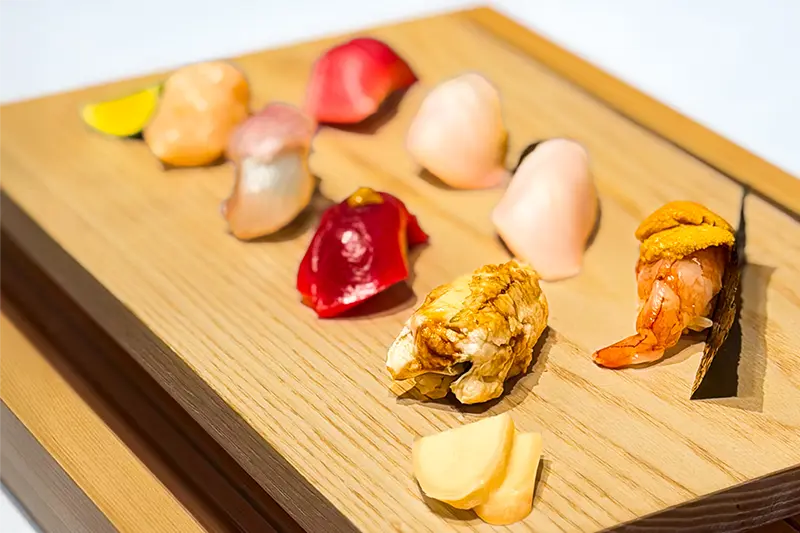
Shima-aji (Striped Jack)
— Met first as sashimi, now over vinegared rice, where its richness comes forward.
King Salmon
— The richest of the salmon, soft and full in flavor.
Matsukawa Karei (Barfin Flounder)
— A flounder held in the highest regard, firm to the bite and quietly sweet.
Madai (Red Sea Bream)
— Delicate and faintly sweet, the measure of white-fleshed fish.
Hon-maguro Toro (Fatty Bluefin Tuna)
— The marbled belly of bluefin returns, slow to melt against the warmth of the rice.
Nishin (Herring)
— A silver-skinned fish with a fuller, more assertive flavor.
Hotate (Scallop)
— Plump and naturally sweet.
Botan Shrimp with Sea Urchin
— Botan shrimp topped with uni, two kinds of sweetness in a single piece.
The selection shifts with each day’s market. This month it opens with shima-aji and king salmon, moves through two white-fleshed fish to toro, and closes on herring, scallop, and Botan shrimp with sea urchin.
Onmono – Warm Dish
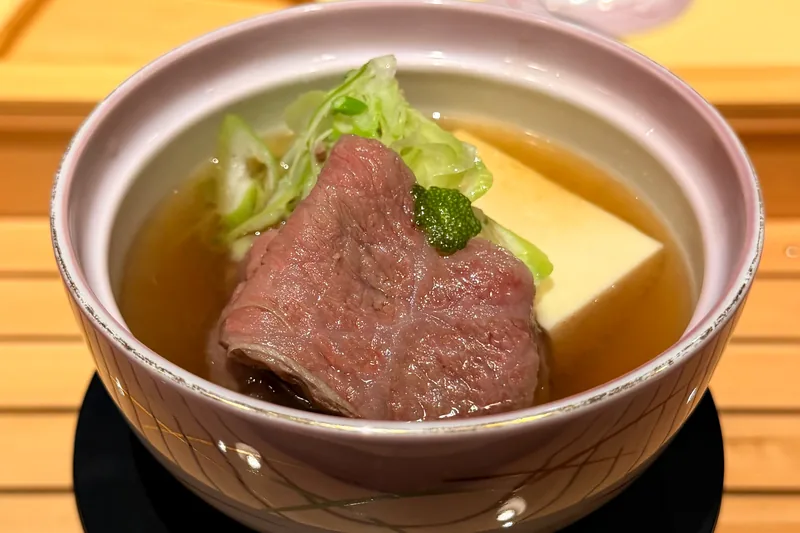
A5 Wagyu Dashi Shabu-Shabu
This month the warm dish follows the sushi, as the final savory course. Thin slices of A5 Wagyu, the highest grade of Japanese beef, pass through hot dashi just long enough for the marbling to soften. In dashi shabu-shabu the broth does the seasoning, so the beef needs little else. Tofu and naga negi, the Japanese long onion, accompany it, and yuzu lifts the richness.
Dessert
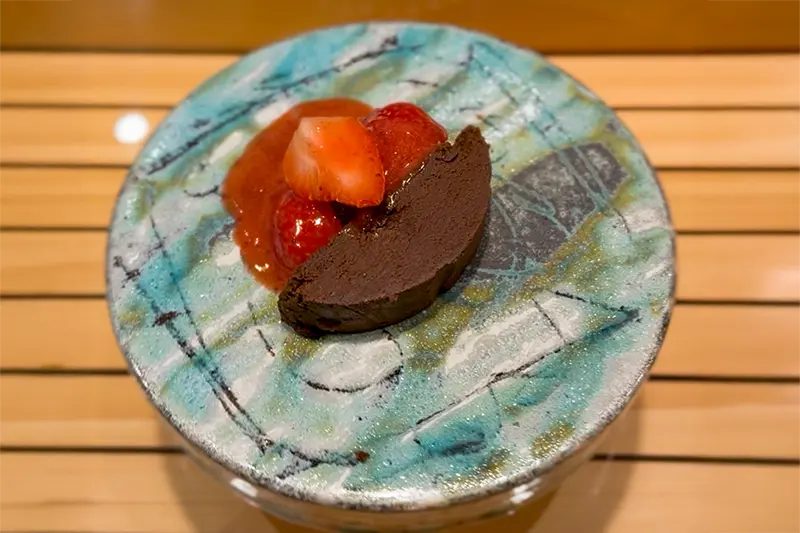
Chocolate Marquise
— Marquise au chocolat, a classic French dessert: chocolate set into a dense, silken slice, richer than a mousse.
Strawberry
— Fresh strawberry, bright against the chocolate.
Reserve Your Table at Migaku Seattle
Migaku’s November Sushi Kaiseki Course is served for a limited season at the counter in Seattle, with two seatings each evening, at 5:00 and 7:30. Seating is intimate and each course is prepared to order, so the experience rewards an unhurried evening.
Reservations are available exclusively through OpenTable. For the most intimate expression of Chef Inaba’s cooking, the Chef’s Choice Kaiseki seats just six guests at the sushi counter each evening at 7:30 pm, by prepaid reservation. On Thanksgiving Day, November 26, Migaku serves holiday courses only, with seatings at 5:00 and 8:00 pm. However you choose to join us, we look forward to welcoming you to Migaku this November.